


Water is a fundamental human necessity, but in Pakistan, the reckless extraction of groundwater has led to a continuous decline in water levels, making depletion an inevitable outcome. This is why, despite rainfall, water scarcity in the country is steadily increasing and has begun to take the shape of a serious crisis.
To address this challenge, the International Water Management Institute (IWMI) has launched a rainwater harvesting project in Pakistan. The first pilot setup under this initiative has been established at Kachnar Park in Islamabad, with the aim of conserving rainwater and recharging underground water reserves.
This project will not only help prevent water wastage but also provide an effective solution to tackle water scarcity in the future. It has the potential to promote sustainable water use, particularly in urban areas.
To understand the benefits and practical impact of this initiative, we conducted a special interview with the Strategic Program Director, Dr. Mohsin Hafeez, the key highlights of which are presented below for our readers.

Shakila Jalil
shakila.jalil01@gmail.com
Q: Why is Pakistan facing a growing water crisis despite receiving rainfall?
Dr. Mohsin Hafeez:
Water is a basic human necessity, but in Pakistan, excessive and unregulated extraction of groundwater has led to a continuous decline in water levels. This is why, despite rainfall, water scarcity is increasing and turning into a serious crisis. The real issue is not the lack of rain, but the failure to conserve it.
Q: What steps has IWMI taken to address this issue?
Dr. Mohsin Hafeez:
In collaboration with the UK Government, WaterAid, and the Pakistan Council of Research in Water Resources (PCRWR), we conducted a comprehensive hydrological assessment of Islamabad. The goal was to identify locations where rainwater could be stored and used to recharge groundwater.
Q: Why was Kachnar Park selected for this project?
Dr. Mohsin Hafeez:
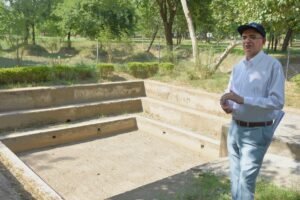
During the monsoon season, water from surrounding areas accumulates in Kachnar Park, often causing flooding. Our research showed that the aquifer in this area is suitable for recharge. Therefore, we constructed a recharge pond and weir structure to temporarily store rainwater and allow it to seep naturally into the ground.
Q: What technologies were used in this project?
Dr. Mohsin Hafeez:
We installed a real-time rain gauge, a device to measure water infiltration into the ground, and a CTD Diver to monitor groundwater level and quality. This allowed us to collect evidence-based data instead of relying on estimates.
Q: What results have been achieved so far?
Dr. Mohsin Hafeez:
Over four years, approximately 566,000 liters of rainwater have been stored underground through a single site. As a result, groundwater levels improved by about 4.5 meters locally, water quality improved, and urban waterlogging decreased significantly.
Q: How has the local community benefited?
Dr. Mohsin Hafeez:
Residents reported that areas previously prone to flooding have improved. Dry boreholes and tube wells have started functioning again, and people are now getting additional water for daily use.
Q: Has this model been replicated elsewhere?
Dr. Mohsin Hafeez:
Yes, following its success, the Capital Development Authority (CDA) established around 200 groundwater recharge sites across Islamabad. These sites are helping restore groundwater levels and reduce flood pressure.
Q: Has the project influenced government policy?
Dr. Mohsin Hafeez:
Absolutely. CDA amended building by-laws to include groundwater considerations. Later, a Green Building Code was introduced, making rainwater harvesting systems mandatory in new constructions, which has also been approved at the national level.
Q: What was the cost of the project and its economic impact?
Dr. Mohsin Hafeez:
The pilot project cost around USD 15,000. The results have been highly encouraging, proving that effective water solutions can be implemented even with limited resources.
Q: Can this model be applied in other cities?
Dr. Mohsin Hafeez:
Yes, cities like Lahore, Karachi, Peshawar, and others can adopt this model to recharge groundwater, reduce urban flooding, and tackle climate change impacts.
Q: What is your message regarding water conservation?
Dr. Mohsin Hafeez:
Pakistan’s water crisis cannot be solved by building dams alone. We must save every drop of rainwater. If government institutions, housing societies, and the public work together, we can ensure a sustainable water future for the next generations.
