
Report: Shakila Jalil
The Pakistan Women Leaders project funded by the European Union and jointly implemented by UN Women and the United Nations Development Programme, in partnership with the Trust for Democratic Education and Accountability (TDEA), launched its flagship Mentorship Programme, “Leading the Future: Empowering Women Through Mentorship in Political Leadership,” in Islamabad today.
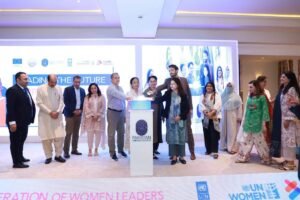 The programme aims to strengthen leadership and create pathways for aspiring women leaders to participate meaningfully in political and public life.
The launch was attended by a diverse group of stakeholders, including parliamentarians, political party representatives, members of the Women Parliamentary Caucus, civil society organizations, academia, media professionals, lawyers, women entrepreneurs, persons with disabilities, representatives from the trans community, and youth leaders, to exchange perspectives and strengthen collective efforts to advance women’s political leadership and participation in Pakistan. In her welcome remarks, Ms. Fahmida Iqbal UN Women Deputy Country Representative, said.
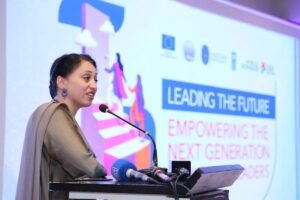
“We are making a deliberate investment in Pakistan’s democratic future, one grounded in a simple conviction: that leadership is not simply born, but cultivated, through opportunity, trust and partnership across generations. Through this Mentorship Programme, we will reach more than 1,700 aspiring women leaders from 57 districts across Pakistan through leadership bootcamps that build knowledge, confidence and lifelong networks. From this cohort, 170 emerging leaders will embark on an intensive journey of mentorship, peer exchange and community action guided every step of the way by women who have walked that path before them.
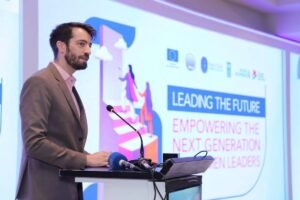
” Speaking at the event Dr. Sebastien Lorion, Acting Head of Cooperation at the European Union Delegation to Pakistan shared his support, reaffirming the EU’s commitment to promoting gender equality and inclusive governance in Pakistan. “Women’s equal participation in politics is essential for stronger democracy. Through the Pakistan Women Leaders project, the European Union is investing in the next generation of women leaders by creating opportunities to build skills, expand networks and access decision-making spaces.” In his remarks, Shahid Fiaz Chief Executive Officer TDEA stated, “This mentorship programme is an investment in the next generation of women leaders in Pakistan. As nearly half of the population, women must have a proportionate voice in decision-making and a meaningful role in leading the institutions that shape public policy and resource allocation. A stronger democracy depends on their active leadership, representation, and influence.”
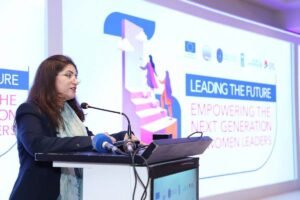
Ms. Nighat Siddique, Director General, Gender and Social Inclusion at the Election Commission of Pakistan (ECP), emphasized the importance of strengthening women’s political leadership through institutional support and mentorship. She said: “We must support a generation of women capable of transforming those institutions. The Election Commission of Pakistan welcomes the Pakistan Women Leaders Mentorship Programme because it addresses a vital link between formal rights and meaningful participation. Through structured mentorship, training, peer networks and institutional engagement, this programme can help convert political aspiration into political preparedness—and political preparedness into public leadership.” The launch also marked the opening of the call for nominations for the PWL Mentorship Programme.
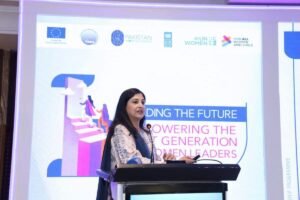
The initiative will support aspiring women leaders, including youth, local councillors, political activists, and civil society representatives, with a particular focus on women from marginalized groups, including minorities, women with disabilities, and women from rural communities. In her closing remarks, Dr. Shahida Rehmani, Secretary of the Women Parliamentary Caucus stated, “To the young women participating in this programme, I would like to say: your voice matters, your ideas matter, and your leadership matters. Pakistan needs your energy, your innovation, and your commitment to public service. Leadership is not defined by position; it is defined by purpose, integrity, and the courage to serve.” The Pakistan Women Leaders Project seeks to amplify women’s political participation and leadership through a comprehensive approach that includes mentorship, capacity building, legislative and policy reforms, and engagement with political and civil society stakeholders to create a more equitable and inclusive political environment in Pakistan.
