


Forests are shrinking, telecom towers are rising, and bees are losing their way
raising concerns over a growing conflict between digital expansion and biodiversity in Pakistan.

By Shakila Jalil
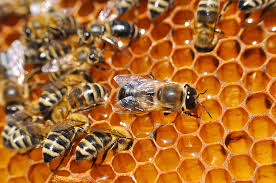
As Pakistan moves toward rapid digital transformation and prepares for next-generation connectivity, environmental experts and beekeepers are warning of an unintended ecological cost: the gradual disappearance of native honeybees — vital pollinators that sustain agriculture, food security, and biodiversity.
Honey is not merely a natural product; it represents a long-standing ecological partnership between humans and nature. For centuries, honeybees have silently maintained this balance through pollination. Today, while Pakistan’s honey production and exports continue to grow, experts say native bee populations are declining at an alarming rate.
Growing Industry, Shrinking Biodiversity
Pakistan’s forests, farmlands, and mountainous regions serve as the last refuge for indigenous honeybee species. These bees play a critical role in crop pollination, yet their populations are steadily decreasing due to habitat loss, climate change, pesticide use, commercial beekeeping practices, and expanding digital infrastructure.
Government data indicates that honey production has increased in recent years, supporting millions of livelihoods linked to beekeeping, agriculture, packaging, and export supply chains. However, specialists stress that the real value of bees lies not in honey production but in pollination , a process essential for food systems and ecological stability.
Historically, Pakistan hosted around six native honeybee species after independence. Today, only three indigenous species remain:
-
Apis cerana (Asian honeybee) — once common across Punjab, Khyber Pakhtunkhwa, Kashmir, and northern Balochistan, now rapidly declining and largely absent from commercial beekeeping.
-
Apis dorsata (giant wild honeybee) — a key biodiversity guardian found in forests and mountainous regions, severely affected by deforestation.
-
Apis florea (dwarf honeybee) — adapted to hot and semi-arid regions of Sindh, southern Punjab, and Balochistan, increasingly threatened by urban expansion and agricultural spraying.
In contrast, Apis mellifera, a European species introduced during the 1970s and 1980s to boost commercial production, now dominates nearly 70–80 percent of Pakistan’s honey industry. While productive, experts warn that non-native bees may disrupt local ecosystems and compete with indigenous species.
Beekeepers Report Behavioral Changes
Beekeepers from northern regions such as Naran report noticeable behavioral changes in bees over the past decade.
“Bee colonies once existed in homes, trees, and rooftops,” said beekeeper Nisar Ali Khan. “But over the last 10 to 15 years, bees began disappearing. Many failed to return to their hives, as if disturbed or disoriented.”
He attributes these changes to increasing human activity, climate shifts, deforestation, and the installation of large communication towers. Commercial migratory beekeeping using foreign species has also created competition that local bees struggle to survive.
Farmers in some regions have reportedly shifted crop patterns after pollination declined, affecting yields of vegetables such as peas and tomatoes.

Experts Cite Multiple Threats
According to Ghulam Sarwar, Director of the Honey Bee Research Institute Islamabad, Pakistan relies heavily on foreign bee species to meet honey demand. However, he emphasized that protecting forests and planting bee-friendly vegetation remain essential to preserving native species.
He noted that while climate change remains a major factor, electromagnetic radiation emitted from telecom towers may also influence bee behavior — particularly navigation and hive return patterns — though comprehensive research in Pakistan is still limited.

Former Inspector General of Forests Syed Muhammad Nasir warned that pollinators across Pakistan are under threat. International studies suggest radiofrequency signals and electromagnetic waves may interfere with bees’ navigation systems, contributing to phenomena known globally as Colony Collapse Disorder (CCD), where worker bees fail to return to hives.
European countries have responded by establishing Bee Protection Zones around high-signal infrastructure — a measure yet to be considered in Pakistan.


Satellite monitoring platform Global Forest Watch reports that Pakistan lost an average of 2,000–3,000 hectares of forest annually between 2020 and 2023, with forest loss rising sharply to nearly 9,500 hectares in 2024.
Meanwhile, telecom industry reports show that between 2019 and 2023, more than 10,600 new cellular sites were installed nationwide as mobile connectivity expanded.
Environmental observers note a troubling parallel: decreasing tree cover alongside increasing telecommunications infrastructure.
Policy Gaps and Limited Research
Pakistan’s National Biodiversity Action Plan acknowledges weakening ecosystems and insufficient data on pollinator populations. Conservation measures remain largely policy-level commitments with limited on-ground implementation.
Experts argue that Pakistan’s agricultural policies prioritize production growth while environmental safeguards remain secondary. The honey industry, they say, is largely viewed through an export lens, leaving native pollinators overlooked.
Recommended measures include:
-
Protection of forest habitats and wild bee colonies
-
Promotion of native bee farming, particularly Apis cerana
-
Use of pollinator-friendly pesticides
-
Annual monitoring of pollinator populations
-
Environmental Impact Assessments before installation of 5G towers
-
Establishment of Bee Safe Zones around telecom infrastructure
Climate Change and Digital Expansion
Pakistan remains among the countries most vulnerable to climate change, facing rising temperatures, erratic rainfall, floods, biodiversity loss, and agricultural stress. Yet researchers highlight another challenge: lack of accessible environmental data.
Requests for information and official responses from telecommunications authorities and cellular companies regarding environmental impacts remain pending, reflecting broader transparency challenges faced by investigative reporting in Pakistan.
A Silent Ecological Warning
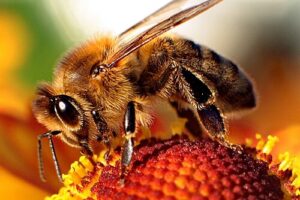
Scientists caution that the disappearance of pollinators threatens far more than honey production. Bees sustain food crops, rural livelihoods, and ecological balance.
“If pollinators are not protected,” environmental experts warn, “Pakistan risks losing biodiversity, food security, and ultimately the sustainability of its own development.”
The debate surrounding 5G and digital expansion, they argue, is not about halting progress — but ensuring that technological advancement proceeds alongside environmental responsibility.
Because when bees disappear, the consequences extend far beyond the hive.
